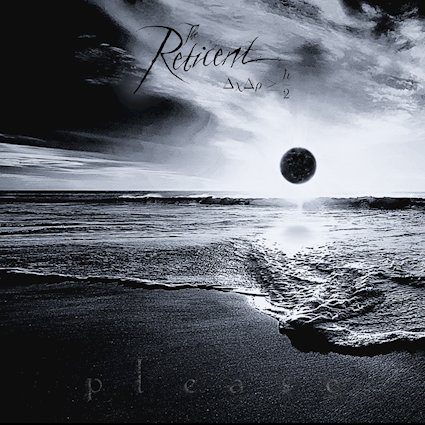
Hailing from Charlotte, North Carolina, prog outfit the Reticent have a history dating back to 2002 with four previous full-lengths under their best. Album number five, “please” attaches a bold thematic step to the band’s Cynic-meets-Alice in Chains-meets-Opeth-meets-Devin Townsend sound. As it should be (and should have been fucking years ago), mental health is a hot topic and the stigma of mental illness and all of us not experiencing happiness and joy all the time continues to be chipped away at. This, in a nutshell, is what The Reticent’s latest, “please” would like to air out. The album has been out for about a month now via Generation Prog Records, but in the battle to be heard in a saturated scene, we’re offering up a bunch of Reticent-related goodies, including a full stream, a couple videos and a super-in-depth, heartfelt and honest description of the album’s background and inspiration by vocalist/multi-instrumentalist/founding member Chris Hathcock. It’s a literal asset dump and we hope it helps and connects as much as it rocks and entertains.
““please” is an album that was a product of the worst time in my life. I had only just started writing it when my father, the person with whom I was the closest, died suddenly. At the same time, I was in the process of divorcing an alcoholic who repeatedly cheated on me and would just disappear for days on end — including when I was in my most painful moments of grief. I had never felt more alone. No friends were around. The family I could talk to were dead. The person to whom I had pledged my life had betrayed and abandoned me. All I had left was music and even it had gone deathly silent. For two months, I heard no music in my head nor listened to any. While not at work, I lived in almost total silence. I became utterly consumed with grief and despair that I simply wanted to die to see some end to the fathomless suffering. At one point, I was standing by the Eno River just contemplating — I had the plan, I had the means, and I had made up my mind. With singular purpose, I got into my car and turned on the engine to go be done with it all. But a song came on the car’s stereo. It was ‘Early Grave’ by The Contortionist. Foolish as it may sound, at that moment it felt like my father was speaking to me, asking me to stay and not act rashly. I sat there in that parking lot and wept. It was there that I decided to finish the album I had started as well as to compose another one at the same time.
“The two albums to come out of that awful period would be split into the two distinct struggles with which I contended. One would be about my disorders and the internal struggles I deal with each day which I titled “please” (representing the one word that seemed tied to all my disorders); the other would be about my intense grief which I titled “don’t go” (the simple request of any who mourn). Rather than a narrative, “please” was more of a diagnostic concept album inviting listeners into my mind. The album weaves through the many battles those who struggle with mental illness may have to fight. ‘The Concealment’ examines what it is like to hide your struggles and disorders from others — having to be someone else in order to function at a job or even within a social group. ‘The Night River’ explores the incessant unrest of the insomniac — the desperation, but also the very real fear that sleep will never come. With ‘The Bed of Wasps’ I wanted to try to capture the essence of what a panic attack feels like — the breathlessness, the overwhelming dread, the gritted teeth just begging for it to be over. ‘The Scorn’ took on a contrasting tone as it is presented from the perspective of those who dismiss mental illness whole cloth — the platitudes, the condescension, these are the people who believe mental illness is only the product of some bad event or is cured by just ‘turning that frown upside down.’ These are the people that believe that major depressive disorder is the same thing as being sad or just having the blues. That leads into ‘The Riptide’ which is a perspective on what depression feels like — it is hollow, empty, and gray. For me, I envision depression as being caught in a riptide or a strong undertow — there is this unseen force pulling you like a stronger version of gravity and though you swim against it you seem to make no further progress eventually leaving you so exhausted and so far from shore. I often refer to depression as being inoculated against joy. The last full song ‘The Chance’ is a perspective on suicide from that of someone who is ready to die. For me, when I had reached the end of my tether, felt I could withstand not a second more, and believed I had no other means of escape, the thoughts of vanishing into oblivion were not sad but hopeful. The suicidal person doesn’t want to die, rather they simply want an end to their pain and feel there is no other option. The fantasy isn’t about the glory of death or a ‘they’ll be sorry’ notion of revenge; it is a yearning for peace and release. The suicidal mind is extremely misunderstood and I believe that is why it is so disregarded. How can we help people if we don’t even understand where they are coming from?
“The other four tracks on “please” drive home the diagnostic aspect of [the album]. ‘Intake’ and ‘Discharge’ are the bookends that show how the mental illness battles can begin and the fallout of how they can end. ‘Diagnosis 1’ and ‘Diagnosis 2’ are, as the titles suggest, literal text from diagnostic manuals but they are relevant to the album in that they help those that may have no idea what these disorders entail a glimpse into the symptoms and patterns of behavior.
“My aspirations with “please” were two-fold. On the one hand, this was a record I needed to make so that I could keep going. It was an arduous process littered with injuries and impulses to quit all together. “please” was as much an act of survival as it was therapy. On the other hand, I hope this album will be able to speak to and perhaps for those that suffer in similar ways. Perhaps this album can help them to feel less alone and unmuted from how they have to hide in their daily lives. I sincerely hope it will do any good for anyone.”
The post Prog Metallers The Reticent Have a Lot to Say About Mental Health/Illness appeared first on Decibel Magazine.