Since 2018, Ontario’s nature protections have been repeatedly weakened. While a few stories such as the ongoing changes to Conservation Authorities or the Greenbelt scandal made headlines, dozens of major changes have flown under the radar, buried deep inside massive government bills. It has been a lot to track, even for us.
Today, Ontario Nature is releasing a comprehensive new resource: Tracked Changes: The Decline of Ontario’s Legal Protections for Nature since 2018. We tracked every single piece of legislation that weakened legal protections for nature and biodiversity from the first term of the current provincial government to today. We broke it all down in plain language, cutting through the legislative jargon to reveal exactly how our environmental laws have been rewritten.
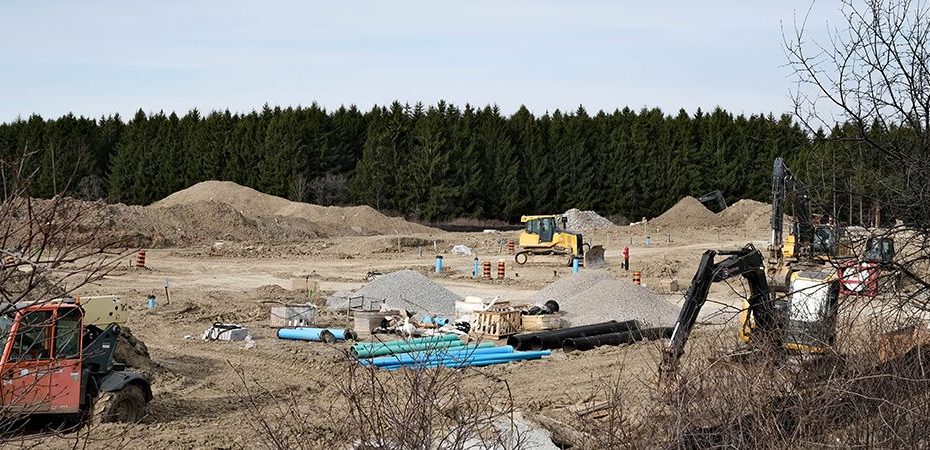
Development next to Mount Albion Conservation Area © Michael Hunter CC BY 2.0
What We Found: A Disturbing Pattern
Our review, detailed in the full report, catalogs the changes made bill-by-bill and schedule-by-schedule. Over the past seven years, key environmental laws, built over decades, have been systematically dismantled.
The Endangered Species Act (ESA) has been a primary target. Changes began with Bill 108 in 2019, which created a “Species at Risk Conservation Fund.” Critics called this a ‘pay-to-slay’ scheme, allowing proponents to pay a fee instead of being legally required to provide an “overall benefit” to the species they are harming. This process culminated in 2025 with Bill 5, which fundamentally rewrote the ESA to prioritize economic considerations over science-based recovery and even created a new law, the Species Conservation Act, to eventually replace it entirely.
Conservation Authorities (CAs), our frontline defenders against flooding and protectors of wetlands, have been substantially weakened. Bill 229 in 2020 forced CAs to issue permits for developments authorized by a Minister’s Zoning Order, even if those projects would be denied under their own standards for flood protection. The Auditor General criticized this move for shifting environmental decision-making from qualified professionals to political processes.
Public oversight and democratic accountability have been sidelined at every turn. The independent Environmental Commissioner of Ontario was eliminated in 2018 through Bill 57. The government has repeatedly circumvented the Environmental Bill of Rights, sometimes passing legislation before public comment periods on those very proposals have even closed, as happened with Bill 150 in 2023.
Ottawa River flood © Ross Dunn CC BY-SA 2.0
The Strategy: Buried in Omnibus Bills
Few of these changes got the headlines they deserved. Nearly all of them were buried inside massive omnibus bills. These are bills that bundle dozens of changes into a single piece of legislation.
For example, Bill 5, the Protect Ontario by Unleashing our Economy Act, 2025, was a single bill that:
Repeals the Endangered Species Act.
Cancelled environmental agreements for the Eagle’s Nest mine project and exempted the Chatham-Kent waste site from certain approvals.
Centralized mining authority in the Minister, enabling fast-tracked permits.
Removed public consultation rights for permits related to the Ontario Place redevelopment.
Established Special Economic Zones where selected projects can be exempted from provincial and local laws, including environmental protections.
This strategy of putting so much into a single bill ensures that major changes to environmental protections pass into law with little media coverage or public awareness. Our new resource cuts through this volume, separating each schedule so you can see exactly what changed and how.
Eastern spiny softshell turtle © Scott Gillingwater
Why This Resource Matters
These changes didn’t happen all at once, and taken together, they systematically dismantle many of Ontario’s most significant legal environmental protections.
This report is designed as a tool for advocates, journalists, and anyone who wants to understand what has happened to nature protections in Ontario over three terms of the current government. We hope this will make it easier for people to see the full picture and understand not only what laws have changed, but how these changes have circumvented democratic transparency.
You can read the full report here.