How This Adelaide Home Celebrates The Owners’ Love Of Punk Rock Music
Architecture
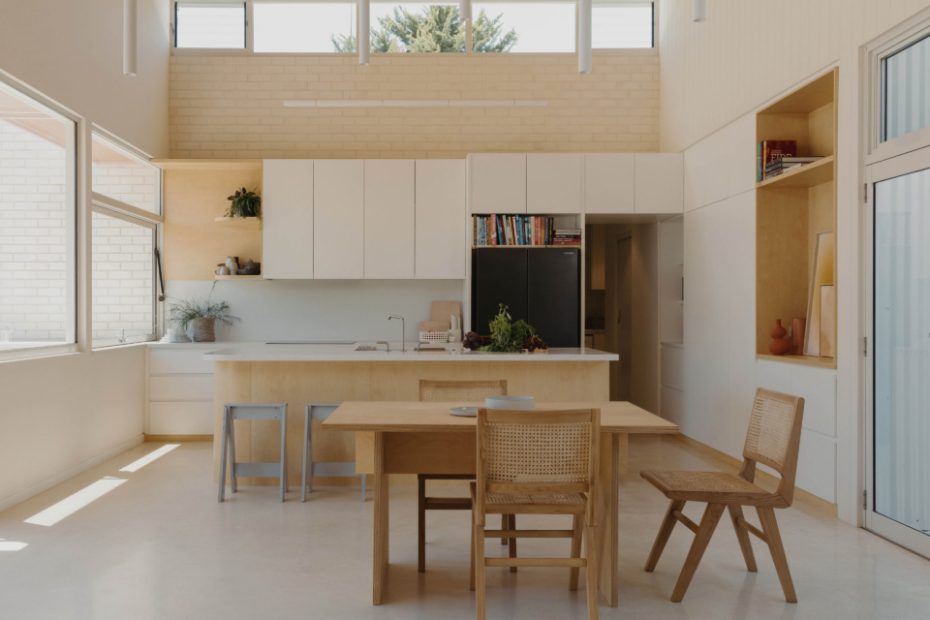
The stripped-back interiors combine bricks with timber panelling.
Lofty ceiling rest above the open-plan living, dining and kitchen.
Activating the laneway with the new social spaces naturally created a secondary frontage, opening up opportunities for northern light to enter both yard and home.
The living room celebrates the family’s passion for music.
Joinery features a music system and ample storage for their expansive CD and record collection.
Textural tiles in the bathroom.
Bricks link the new addition with the original structure.
The second entrance.
The project makes the most of the property’s location next to the laneway.
The original front facade.
Laneway In HiFi by RADS is an Adelaide family home with a rebellious side.
Located on a 392-square-metre block in Millswood, the original villa house was fairly standard for the area, comprising a period facade appeal with an awkward ’80s-style addition at the rear, blocking light in the living spaces.
But there were some huge benefits to the location of the site, being both on a suburban street and on the corner of a rear access lane.
‘We saw the opportunity to set a precedent of how the traditionally “back of house” laneway could be activated,’ RADS director Chris Rowlands says.
Stripping back the interiors completely, the architects reorganised the floor plan to unlock the property’s untapped potential. A new addition oriented towards the northern laneway now serves as a secondary entrance — with one passerby even commenting during construction that the house was ‘finally facing the right way’.
Gardens lead to the beating heart of the home: a sunny social hub that also bucks tradition in favour of something much more personal.
‘Upon meeting our clients, it was evident they had a passion for music. There was an extensive record and CD collection of punk rock albums, which immediately helped identify their interests,’ Chris says.
‘We reflected on the slowly fading ritual of flicking through albums, being drawn into the artworks and surprised in the booklets. We wanted the home experience to be more like a record store where the owners could rediscover cherished memories and be able to use album covers as art to fill the space. This was a huge driver for the social anchoring of the home.’
Inside, it feels perfectly pared-back, with custom joinery, timber-lined ceilings, and a hidden wine cellar tucked into the pantry. Robust brick walls blend old with new, creating a visual gesture through the lane where white bricks meet the original structure.
In line with passive house principles, the new footprint also maximises natural sunlight for warmth in the winter months. Concrete floors provide thermal mass, while eaves offer shade, and windows harness cooling breezes.
‘The feedback has been that only mechanical support is required in the peak extremes of summer and winter, which in South Australia is difficult to completely avoid, ranging from 40-degree heat waves to single-digit rainy days in winter,’ Chris adds.
‘I like to think that our job is to take our clients’ lifestyles and find a way to amplify them — no HiFi pun intended,’ he continues.
‘For our clients, the vision is to sit down and listen to music with their daughter, cook socially, duck down for a bottle of cherished red, or cook a barbecue outside and still be connected.’