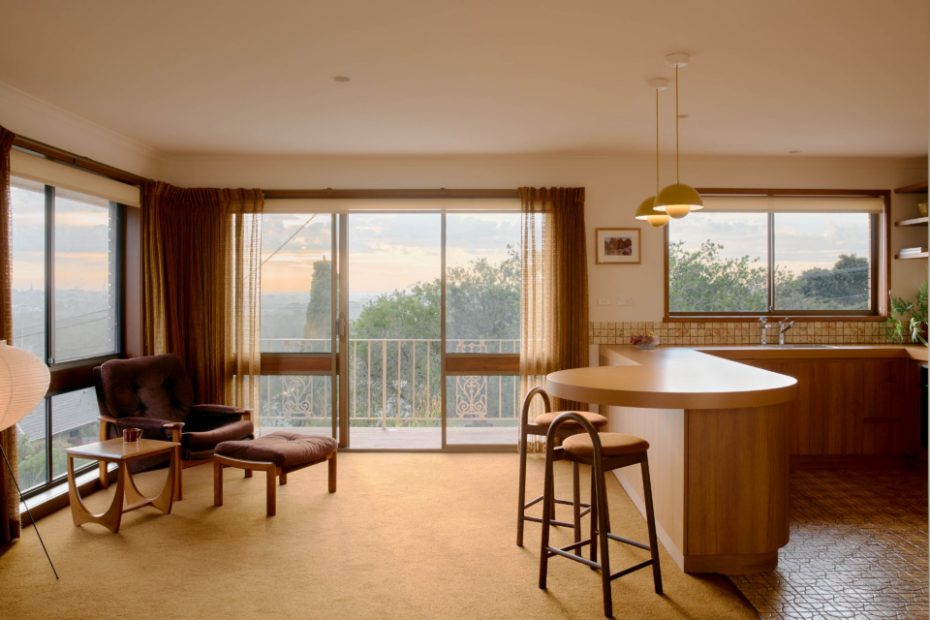
A 1970s Home Subtly Transformed With Major Nostalgic Appeal
Interiors
Danish dining chairs and dining table from Grandfather’s Axe. The pendants are original.
New storage on the ground floor makes the most of the original recessed wall.
The original wallpaper in the bedroom remains. Bedside tables from Mid Century Avenue.
The bathroom has been transformed with new cabinetry, lighting and tiles.
Stepping into this 1970s home is like stepping back in time; that’s the point.
Cedar House, owned by a retired couple who relocated to Geelong from Melbourne to be closer to family, was thoughtfully renovated with the help of Belső Design Studio to look just as it always did — but with modern-day functionality.
‘There’s so much beauty in preserving original character and allowing homes to tell their story,’ says Kaylene Bryce, Belső Design Studio founder and design director. ‘A renovation doesn’t always need to completely reinvent a space, sometimes the most successful outcomes come from carefully refining and celebrating what’s already there.’
This particular home had great bones — they normally do — but its main shortcomings were functionality and comfort; the kitchen no longer worked well for modern living; lighting was dated and inefficient; the en suite featured a large spa bath that ‘needed to go’; and the heating and cooling needed significant improvement.
However, none of this required the home’s layout to change. ‘One of the beautiful things about this home was that the original floor plan worked really well,’ explains Kaylene.
Instead, they focused on restoring and refreshing the existing spaces, true to the home’s original design.
For this, Kaylene and her team looked to the home’s features — most notably the curtains, floor tiles and kitchen splashback, which all remain installed in the home.
‘Retaining the mosaic floor tiles and original splashback tiles was incredibly important to both the clients and the project as a whole,’ says Kaylene.
The owners worked closely with the builders to salvage and clean all the tiles during the kitchen demolition so they could be reinstalled later.
Their efforts weren’t in vain, the new kitchen is filled with warmth and familiarity with its laminate benchtop, circular island and palette of earthy oranges, rich browns and textural finishes.
‘Small gestures like that helped the renovation feel less like a replacement and more like an evolution of what was already there,’ explains Kaylene.
The rest of the home underwent a similar nostalgic treatment; the bathroom was totally transformed with new tiles, cabinetry, lighting and shower; the living spaces had new carpet installed; and furniture was carefully selected with most pieces patiently sourced from second-hand or vintage stores.
The ‘new’ home doesn’t look new at all, which makes it all the more impressive.
‘I hope projects like Cedar House encourage people to see the value in working with what already exists rather than immediately stripping everything away,’ says Kaylene.
We couldn’t agree more.