How Ceramicist Theodosius Ng Harnessed Chronic Pain + Turned It Into Art
Studio Visit
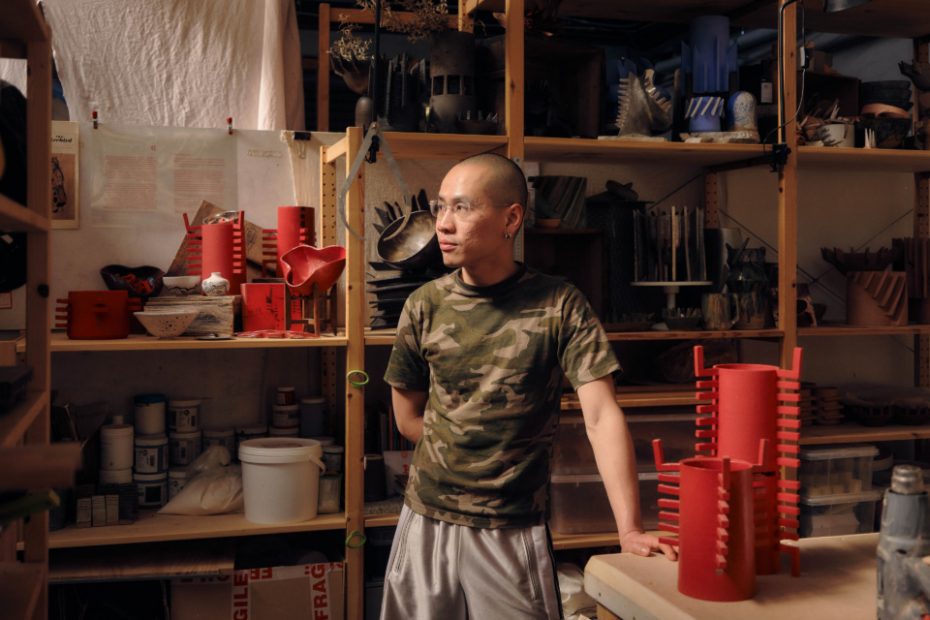
Ceramicist Theodosius Ng.
External ‘fins’ are a signature element to Theo’s distinctive handcrafted vessels.
Theo meticulously measures and cuts the ‘fins’ for their vessels.
Theo is currently exploring censers, ritual objects used for religious ceremonies and traditional Chinese medicine.
Instead of long, single-task studio days, Theo now juggles multiple processes at once.
The artist’s process has changed since their accident, adapting to capacity.
We often hear the refrain ‘beauty is pain’ — a phrase used to justify discomfort in the pursuit of something visually appealing.
In Theodosius Ng’s practice, that logic is quietly reversed. Their work suggests something more generous, and perhaps more radical: that pain itself can be beautiful.
In 2018, a workplace accident resulting in a broken wrist led to ongoing chronic pain and a forced two-year break from the studio. For Theo, the gap this left in their life was destabilising, removing a vital means of expression.
During this period they worked in retail, where visual merchandising offered some creative relief, but with physical and conceptual limitations. Outside of work, they turned to gentle gardening, caring for cacti and succulents; ‘It’s a grounding practice that continues to teach me patience and what it means to nurture,’ explains Theo. ‘They also inspire my work.’
Returning to the studio required a complete rethinking of how to create. Chronic pain means Theo’s capacity fluctuates constantly, demanding flexibility and foresight.
Instead of long, single-task studio days, Theo now juggles multiple processes at once — throwing, handbuilding, clay recycling, preparation — so progress can continue even when physical stamina is limited. On lower-capacity days, marketing and administration take precedence.
Pain still interrupts the process. Vessels are sometimes abandoned mid-way, when Theo feels a twinge that signals continuing would cause harm.
‘I’ve felt frustrated, sad, angry and overwhelmed at not having the capacity to create, which affected other parts of my life with feelings of doubt and hopelessness,’ they say.
Yet recent work with pain specialists has fundamentally shifted Theo’s perspective: understanding pain as information — a communication rather than a failure.
‘I’ve come so far, integrating pain and healing as part of the process and practice, recognising that this is what sets my work apart… How it visually expresses pain through form and finish, and the alienation and “otherness” I feel from it. Yet, the same strength that’s fostered and nurtured because of it.’
It’s this deeply personal expression that makes Theo’s bold, spiked forms stand out from the rest. Drawing from every facet of their life, Theo’s works also reference ancient Chinese ritual vessels, objects associated with religious ceremonies, and traditional ornaments — all reinterpreted through a contemporary and queer lens.
‘I deconstruct these ancient visual motifs, silhouettes and flourishes and propel them into a contemporary context… They are stranded outside their original context, drawing parallels to the immigrant experience of leaving the familiar for the unknown,’ Theo explains.
Clay has become both material and metaphor. From raw material to finished surface, a single piece may take days or months, shaped by fluctuating capacity.
Through pacing, adaptation and deep bodily awareness, Theo has forged a practice that doesn’t just survive pain — it transforms it into something powerfully creative and unmistakably their own.
An edited version of this story originally appeared in The Design Files Magazine Issue 04. Subscribe to the biannual print magazine here.