Natural Light Is The Main Character Of This Maribyrnong Home
Architecture
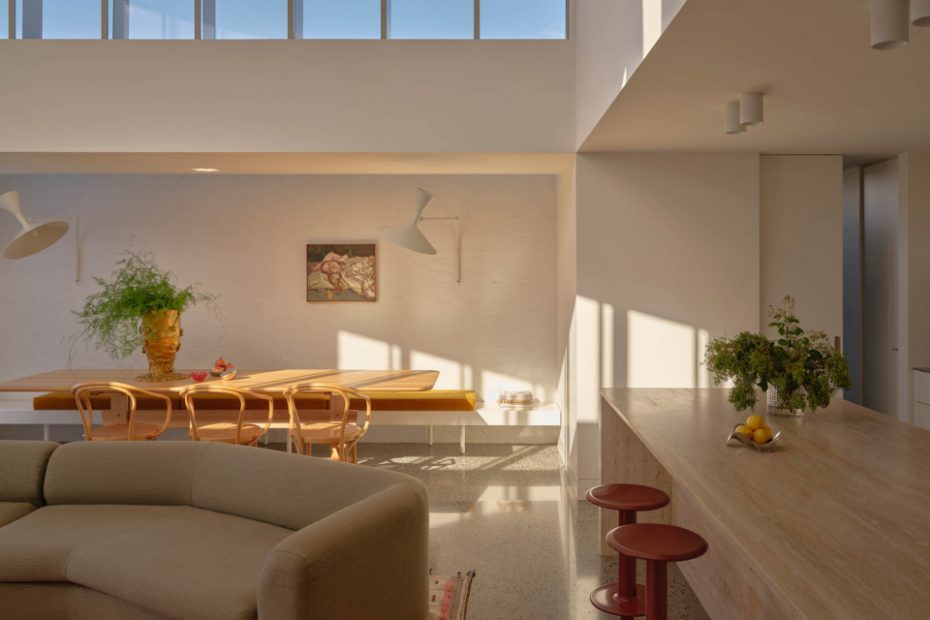
Dining chairs by Thonet. Lampe De Marseille by Nemo. Dining table by Sawdust Bureau. Sofa by Jardan. Artwork by Serena Cowie from Oigall Projects. Vase by Gaetano Pesce for Fish Design.
Dining chairs by Thonet. Lampe De Marseille by Nemo. Dining table by Sawdust Bureau. Sofa by Jardan. Artwork by Serena Cowie from Oigall Projects.
Rug by Loom. Sofa by Jardan.
Side table by Serax from In Good Company. Plinth by Jordan Fleming. Bronze wall mask by Leigh Welsh. Dining chairs by Thonet. Lampe De Marseille by Nemo. Dining table by Sawdust Bureau. Sofa by Jardan. Artwork by Serena Cowie from Oigall Projects. Vase by Gaetano Pesce for Fish Design.
Aluminium candelabra by Studio Ceravolo. Lampe De Marseille by Nemo. Dining table by Sawdust Bureau. Sofa by Jardan. Vase by Gaetano Pesce for Fish Design. Side table by Serax from In Good Company. Plinth by Jordan Fleming. Bronze wall mask by Leigh Welsh.
Dining chairs by Thonet. Dining table by Sawdust Bureau. Sofa by Jardan. Vase by Gaetano Pesce for Fish Design. Side table by Serax from In Good Company. Plinth by Jordan Fleming.
The original portion of the house was reconfigured to include two bathrooms.
Green bathroom tiles help bounce light around the space.
The outdoor kitchen area.
The working from home area found its home in a new mezzanine level, which doubles as an overhanging structure for the outdoor entertaining area.
Eight years ago, Studio Ceravolo’s clients enquired to start the journey of renovating and extending their Maribyrnong home.
‘They wanted to take their time and do it over many years,’ explains Studio Ceravolo architect Rosanna Ceravolo.
The existing Melbourne house was a relatively modest weatherboard Californian bungalow that had undergone internal alterations about 10 to 15 years prior. What was lacking were some practical features, namely a large garage, generous indoor and outdoor kitchens, and a flexible space for working from home or lounging. With generous side setbacks and a north-fencing backyard, there was plenty of space to make it happen.
The existing home was mostly left intact – with the exception of a rear lean-to and backyard garage that were demolished – and the internal layout reconfigured only slightly to accommodate three bedrooms and two bathrooms.
The skillion roof of the addition is designed to mirror the form of the existing pitched roof, clearly differentiating the new structure from the original.
Incorporating a relatively large garage and workshop space required careful planning to allow for a generous open-plan kitchen, living and dining area. ‘I felt it was critical to give it height, volume and an excess of natural daylight ensuring that the space felt generous and abundant despite its relatively small footprint,’ says Rosanna.
‘Access to natural daylight and sunlight throughout each of the spaces was the most critical aspect of the design. The light becomes a character in the story of the home – never stagnant, activating and enlivening specific areas across different times of the day.’
The working from home area found its home in a new mezzanine level, which doubles as an overhanging structure for the outdoor entertaining area.
Finishes in the extension are relatively minimal, robust and classic, including brick and concrete chosen for their passive solar qualities. ‘We used double brick throughout the ground floor of the extension much of which was salvaged from the existing paving,’ says Rosanna. ‘The first floor structure comprises metal brise soleil abutting a simple Mini Orb corrugated cladding, used for its vernacular Australian language and ease of application and maintenance.’
Glazing throughout the home in the form of skylights and a highlight brise soleil structure allows light to pour in and wash against the texture of the bagged-brick walls, enhanced by silver travertine benchtops and green bathroom tiles.
It’s this dance of natural light that makes this home so special to inhabit. As Rosanna says, ‘It is warm and inviting to be in but it is also deeply poetic and existential. It speaks to the ephemeral nature of everything that is important and real. The spatial quality that is created in that precise position and time is there for a mere moment, and then it is gone.’