Family Life In An Architecturally Significant 1970s Townhouse
Homes
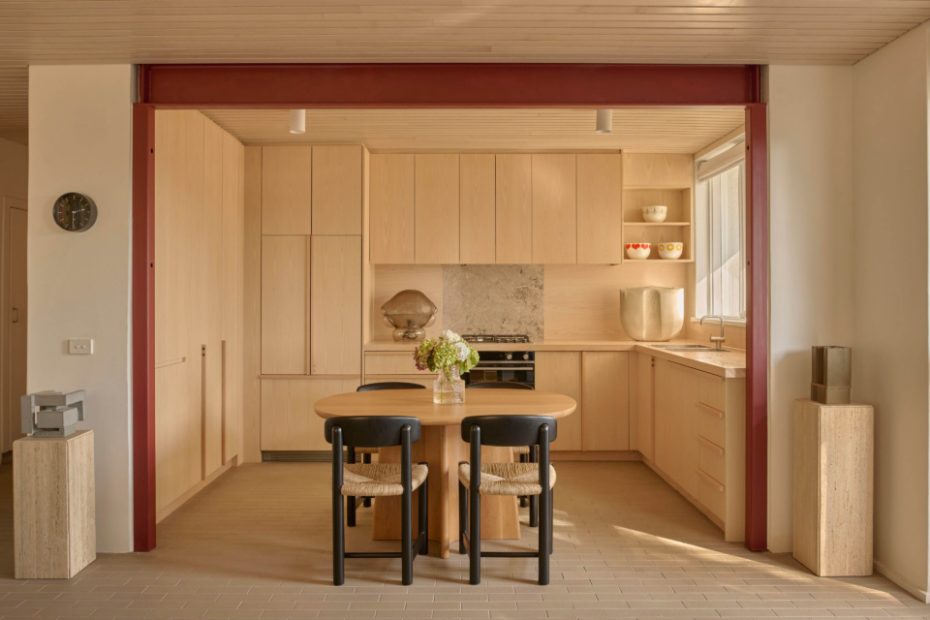
Deumillar Dining Chairs by Gubi. Olivia Dining Table in American oak by Studio Bastiras. Kitchen in American white ash designed by Studio Bastiras. Kolonn Vase by Skruf on table. Concrete sculpture by David Umemoto on travertine plinth. Ceramic by Bruce Rowe on travertine plinth. Vintage Finnish Finel bowls on open shelving. Vintage Patroclo Table lamp by Gae Aulenti for Artemide. Vintage Japanese circa 1960s ceramic.
Deumillar Dining Chairs by Gubi. Olivia Dining Table in American oak by Studio Bastiras. Kitchen in American white ash designed by Studio Bastiras. Kolonn Vase by Skruf on table.
Deumillar Dining Chairs by Gubi. Olivia Dining Table in American oak by Studio Bastiras. Kitchen in American white ash designed by Studio Bastiras. Kolonn Vase by Skruf on table. Vintage Patroclo Table lamp by Gae Aulenti for Artemide.
Vitra Noguchi Coffee Table. Akari UF-L10 floor lamp. PK22 Lounge chairs designed by Poul Kjaerholm.
Light ash ceiling by Australian Timber Ceilings. Vintage Le Corbusier poster. Vintage PK11 chair designed by Poul Kjaerholm. Ash Grey Brick Facing Tile by Robertson’s Building Products. Concrete sculpture by David Umemoto on travertine plinth.
Pacha Lounge Chair by Gubi. Connect Sofa by Muuto. Vintage Le Corbusier poster. Vintage PK11 chair designed by Poul Kjaerholm. Vitra Noguchi Coffee Table.
Louise, John and Oscar (11) Bastiras in their Elsternwick home.
Sculptures by Titania Henderson.
Vintage Japanese mid-century vessel. Modular shelving system and desk unit in American White ash by Studio Bastiras.
Tower Of The Sun sculpture by Taro Okamoto for the 1970 Osaka World Fair. Modular shelving system and desk unit in American White ash by Studio Bastiras. Lavis Chair in American black walnut by Khai Liew. Pacha Lounge Chair by Gubi.
Vintage fibreglass elephant stool by Sori Yanagi. Baghad Table lamp by Mathieu Mategot for Gubi. Towels by Baina. Shower screen by Studio Bastiras. Ash Grey Brick Facing Tiles by Robertson’s Building Products.
Custom joinery and shower screen Studio Bastiras.
Various vintage mid century artworks.
Mantis Light by DCW Editions. Vintage PP502 Swivel Chair by Hans Wegner for PP Mobler. Desk in American white ash by Studio Bastiras. Mid-century Scandinavian artworks.
Meguro Stool by Studio Bastiras. Osaka Bed in American white ash by Studio Bastiras. 9209 Table Light by Gubi. FA 33 Mirror by Gubi. Sheets by In Bed. Throw by Magniberg. Artwork by Ksenia Shinkarenko.
The design by architect Harold David Shafer is characterised by projecting ‘window hoods’ or ‘organ pipes’, framing narrow sliding openable windows that span the full building height.
Linear Outdoor Table and Bench by Muuto. Vintage Wire Chairs by Bertoia.
For years, Louise and John Bastiras would always detour to drive back this quirky townhouse development in Elsternwick.
Designed by architect Harold David Shafer and built in 1973, the homes stand out as one of few brutalist-style buildings in the inner south-eastern Melbourne suburb. Each property has a prominent facade, characterised by projecting ‘window hoods’ or ‘organ pipes’, framing narrow sliding openable windows that span the full building height.
When Louise and John saw one of the homes for sale, they didn’t hesitate. ‘We couldn’t believe we had the opportunity to purchase one of the apartments,’ says Louise. ‘Always being huge fans of brutalist architecture, we were so excited to refurbish this perfect three-bedroom, north-facing apartment with a terrific courtyard and garden.’
They moved in about 10 years ago, and reworked the interior to suit their taste and lifestyle as new parents. ‘Nothing was left untouched,’ says Louise. ‘John redesigned everything: the kitchen, the bathrooms, the living spaces, the ceilings, the floors. We also completely reimagined the outdoor areas.’
Throughout the process, Louise and John were cognisant of the home’s architectural significance and honouring its spirit. ‘The challenge with a building like this is that you are always in conversation with the original architecture. You cannot impose on it. You have to listen to it and respond,’ explains Louise.
‘We wanted the home to feel considered at every level: the material under your hand, the weight of a piece of furniture, the way light moves through the space across the course of a day.
‘We were influenced by classic design principles — honest materials, functional beauty, nothing wasted — combined with the mid-century spirit of the building itself.’
New materials are contemporary, yet sympathetic to Harold’s original design, prioritising raw, tactile surfaces: brick tiled floors, American white ash joinery, and white ash ceilings. Strong angles across the custom shower screen, sculptural seating, and lighting reference the building’s distinct facade.
‘Every material was chosen for its honesty and its warmth. Nothing is trying to make a statement on its own — everything works together to create a particular feeling,’ says Louise. ‘We wanted it to feel like somewhere you exhale the moment you walk in.’
Naturally, as the founders of In Good Company, the couple have many items from their design store at home, as well as beloved 20th century furniture, which match the craftsmanship of the build. Pieces by Vitra, Muuto, Gubi, Kvadrat, String Furniture, Hay, and &Tradition all feel at home here, alongside a dining table John (aka Studio Bastiras) designed and made specifically for the space. He also designed the custom-made joinery throughout.
Louise and John’s son Oscar, now 11, was one-year-old when they moved into this home. ‘He has grown up entirely within these walls — learned to walk here, started school from here, become himself here. Watching that happen inside a space John designed entirely has been one of the great privileges of our life together,’ says Louise.
Now a slightly older family, they are ready for the next chapter — a new space to pour themselves into and make entirely their own. Wherever they go, the Bastiras family will always look back fondly at their time in this Elsternwick home, which has recently been heritage protected.
‘This building deserves to be known. Harold Shafer created something genuinely remarkable in Elsternwick in the early 1970s and it has stood the test of time completely,’ says Louise.
‘Whoever lives here next is inheriting something special: a home that has been loved, considered, and cared for at every level.’