This Heritage Sydney Terrace Hides A ‘Subtly Radical’ Renovation
Architecture
The living room at the front of the terrace was retained and restored. Artwork by Bill Henson.
The original Victorian facade.
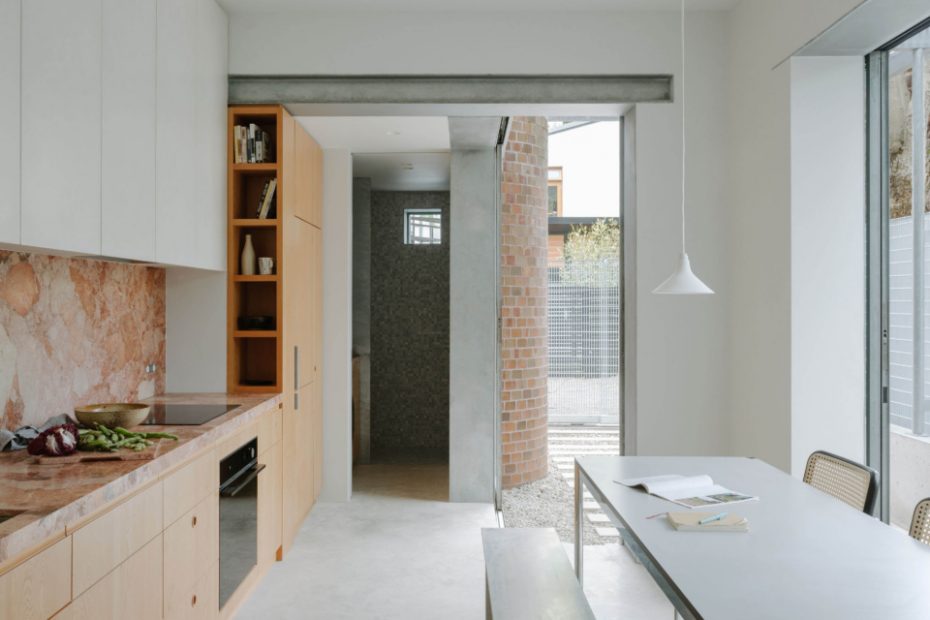
New concrete floors line the open-plan dining room and kitchen. Thonet S 64 chair and USM dining table from Anibou.
The connection between old and new.
Stone mosaics and tiles were used in the new bathroom as a reference to the original small-format tiles common of the Victorian era.
The upstairs bedroom opens to the new galvanised steel deck.
‘The unusual historic approval for an elevated deck allowed this structure to be retained as an elevated private open space, which is generally not a supported approach by the local council,’ Jemima says.
New red-brick masonry ties in with the original structure.
The view of the house from the rear.
At first, ‘Row’s End’ by Retallack Thompson was a project focused on ‘restoration and repair’.
The house, a Victorian terrace with its largely original layout, had seen better days when the owners initially approached practice director Jemima Retallack for the renovation.
‘For our client, their connection to the house was one of nostalgia, being the first house they owned and started a family in (early 1990s). They’d then rented it out over the years when they moved to Brisbane and raised that family,’ Jemima says.
‘They now found themselves retiring, the children grown, and were looking to spend more time in Sydney and so the condition of the house needed to be addressed.’
The brief comprised a laundry list of challenges. With two ‘good rooms’ to the front, and a lean-to kitchen to the back, the existing home was heavily damaged, suffering from the invasive roots of neighbouring trees and poor stormwater management.
‘We really wanted to ensure that the new works were about maintaining the future of the house in a manner compatible with the use of the house by our clients,’ Jemima says.
‘They really loved the existing house and the way it worked, so it was about making the home more robust and appropriate for modern living — seeing it into its next 100 years.’
The other consideration was the heritage conservation restrictions of the area, which led council to have quite a ‘conservative approach’ to the materials used, even when obscured from the street.
However, rather than following the traditional form of the terrace, the architects took inspiration from a singular feature: a spiral steel staircase that led to an elevated timber deck at the rear.
The deck itself, which had been a historic approval from the 1980s, was especially unusual for the neighbourhood. ‘So much so, the council spent a long time checking it had been legally approved,’ Jemima says.
Determined to maintain this rare (now rotten) platform that typically couldn’t be installed today, Retallack Thompson proposed a ‘like for like’ replacement of the existing timber structure in galvanised steel.
‘The singular steel material is reflective and bright and takes on the colours of the surrounding trees and sky. Whilst materially heavy, it provides a light counterpoint to the heritage brown brick of the existing house. A clear delineation of what is old and new,’ Jemima adds.
Continuing this subversive material palette, the interiors introduced new concrete floors, wax-finished plaster walls, and thin galvanised steel set windows that blur the boundaries between the kitchen, living space and the outdoor courtyard.
The heritage bones at the front were also restored, including the original timber floors. Damaged porcelain tiles of the front balcony were replaced with bluestone cobblestone, and even the red-brick nods to the existing masonry.
In Jemima’s own words, the project offers a ‘subtly radical’ approach for transforming heritage housing; one that proves how to renew, without eschewing conservation.