Bill 73, Protecting Ontario from Urban Wildfires Act, was introduced to the Ontario legislature in 2025 and marks an important step to raising the profile of urban wildfire risk awareness and action. People working in conservation, landscaping, and gardening groups need to help our neighbours understand the risks of urban wildfires and take the right protective steps. Ontarians need to urge municipal and provincial lawmakers as well as civil servants to provide frameworks and revise rules to help us in this important climate mitigation task.
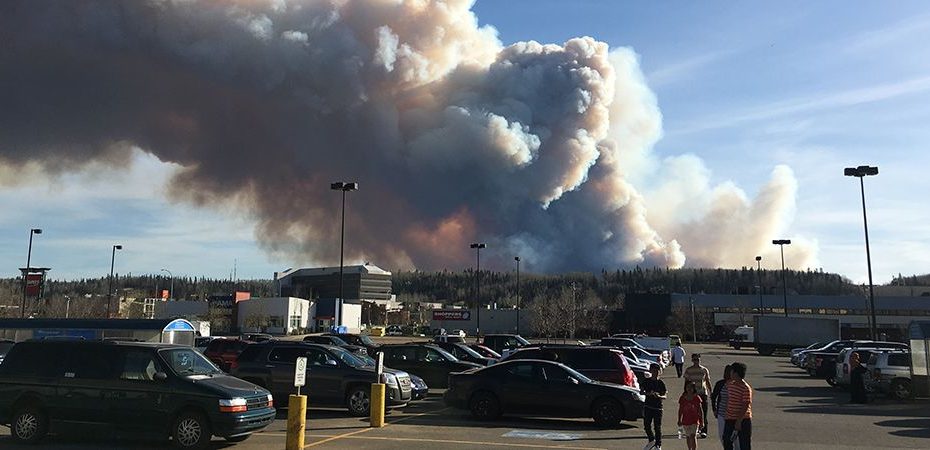
What’s the risk? Briefly, that in the next decade climate warming-driven wildfires like the ones that devastated parts of Jasper, Fort McMurray, Lytton, and many other towns will burn further south during droughts and heatwaves. As temperatures rise, urban wildfire risk in Ontario communities will increase.
I’m an adjunct professor in biology at York University. I speak often with gardening and landscaping groups about wildfire prevention in homes. For the last few years, I’ve been warning these audiences that we need to adopt best in class practices for urban fire risk reduction. Of course, many of these practices are building-related and involve improving fences, siding, roofing, and eaves. But reducing the frequent use of higher flammability evergreens and other foundation plantings must be on our list.
Fort McMurray fire, Alberta, 2016 © Jason Woodhead CC BY 2.0
Fire-Resistant Native Plants for Ontario Homes
Evergreen conifers and tall grasses are commonly used near homes. Ontario does have a page on “FireSmart landscaping” but many (most) groups I speak to aren’t aware of the facts it lays out. The page has a good list of fire-resistant native plants for Ontario that can be used closer to homes – none are evergreen.
FireSmart suggests better fire-resistant native plants for Ontario homes include:
Nannyberry
Ninebark
Wintergreen as a groundcover
Bearberry between shrubs
Native grasses are elegant additions to landscaping but need to be kept away from houses. The worst-case scenario is a moist spring with luxuriant growth followed by dry summer and fall days. That’s what happened in the scrublands around Marshall Colorado in 2021. A high-speed wind system fanned an incredibly fast-moving grass fire front towards a subdivision. 37,500 residents evacuated resulting in two deaths and 1,084 buildings burned with estimated damage at US$2 billion.
The FireSmart concept of the “Home Ignition Zone” (HIZ) is the “100-200 feet around the home”. Typically, this would include several properties in many of Ontario’s downtown areas. My downtown lot is considered wide at 30 feet; defining an HIZ for my property would mean including two or three adjoining houses on each side. Several of them have large conifers right next to the house.
Nannyberry © Matt Lavin CC BY-SA 2.0
Action at the provincial and municipal levels will be needed to remedy this. Toronto, for example, has many blue spruces or cedars that were planted as “nice” four-to-five-foot trees in yards. They have since grown to three or four stories tall and brush against houses. A paper on Toronto’s tree inventory said eastern white cedar is one of our most common trees.
In fact, FireSmart guidance from Kamloops Fire Rescue identifies cedar hedges as highly flammable due to their combustible oils, dense foliage and tendency to accumulate dry material. Yet to cut down one of these trees requires a costly permit from the city.
I’m conflicted on this. Many of our birds love dense evergreens as safe places to nest. But I suggest we start a 10-year program of removing flammable landscaping near our homes and replacing with less flammable native shrubs. We should also help our nurseries and landscapers build up lists and inventories of low flammability natives.
Money talks. Politicians should be aware that many of the most expensive properties in Toronto are adjacent to ravines and thus at higher risk because fire spreads rapidly uphill. Those property owners could be a force in moving action forward if they were aware of the risks.
Please raise awareness of this bill, of the FireSmart information and of the need for landscapers and homeowners to change planting practices.