Why This Design Studio Is Bringing Greenery Back To Our Cities
Climate
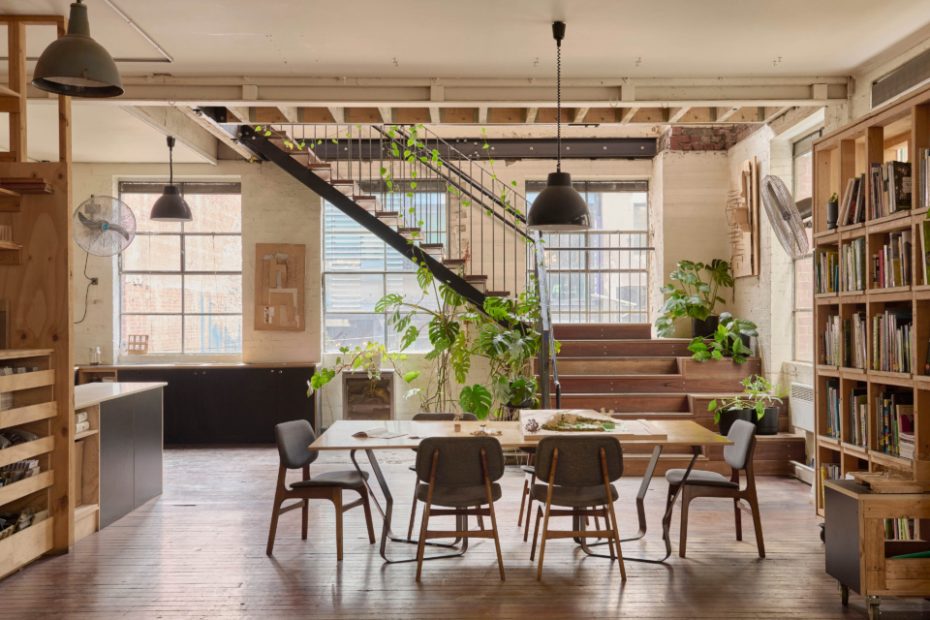
Inside OCULUS’ Melbourne office.
OCULUS director Bob Earl and associate director Claire Martin.
The office features a built-in bike rack.
Plywood walls showcase design concepts throughout.
The team at work.
The team is made up of those with expertise in landscape design, architecture, urban infrastructure, and horticulture.
OCULUS worked on designing a dramatic new arrival experience and sculpture walk for TarraWarra Museum of Art’s Eva and Marc Besen Centre. Photo – Leo Showell
The project was designed in collaboration with Kerstin Thompson Architects and Wurundjeri horticulturalist and artist Craig Murphy-Wandin to create a multi-purpose learning and performance space for family and children’s programs, talks, forums, workshops, live arts, and educational programs. Photo – Leo Showell
The new walkway connects the new Centre and existing Museum. Photo – Leo Showell
Market Street Park. OCULUS collaborated with the City of Melbourne to design the first urban park in the central city since City Square was completed in the 1980s. Photo – Peter Bennetts
Photo – Peter Bennetts
When we go about our daily lives, driving on roads, walking through parks, catching public transport, and working in big buildings, it’s easy to neglect all the moving parts it takes to make a city truly thrive.
But the multidisciplinary design studio OCULUS knows the complexities of our built environment better than most.
It was 1993 when Bob Earl and Don Hoover founded the business with a focus on designing public spaces that make an impact.
Today, OCULUS is a leader in this space, with studios across Melbourne, Sydney, and Washington DC that employ more than 40 people with expertise in urban design, landscape architecture, architecture, industrial design, and horticulture.
The driving force behind the work they do is really about shaping our cities to build a better future — especially when it comes to the climate crisis.
OCULUS associate director Claire Martin says not only is their commitment to sustainability represented in their projects, but also in the company’s everyday processes, including the decision to be a customer of Momentum Energy and purchasing 100% GreenPower.
‘We chose Momentum Energy because they are Australian-owned by Hydro Tasmania, which is Australia’s largest generator of renewable energy,’ Claire says. ‘As part of our Climate Active accreditation, we are committed to purchasing 100% GreenPower.’
OCULUS is signed up to GreenPower: a government-accredited program that matches the electricity they use with renewable electricity, generated from accredited Australian projects. This offers OCULUS a simple, credible way to support Australia’s renewable energy future.
‘Whether as built environment professionals, producers or consumers, we need to focus on our collective action,’ Claire says. And this is just one of the ways the company is making a difference.
They’ve had a hand in major projects around Australia; from providing landscape design celebrating Noongar kadadjin (knowledge) for one of the most significant urban redevelopment projects in Western Australia, to delivering the diverse arrival gardens at TarraWarra Museum of Art.
‘How we tend to measure whether our projects have been successful is how much public engagement and benefit they have generated,’ OCULUS associate director Claire Martin says.
‘How they’ve been received by the community they are part of and how regenerative; whether they deliver social, cultural, environmental or economic benefits.’
In New South Wales, for example, there’s a ‘shared ambition’ focused on accelerating urban greening to create places that are cooler, healthier, and more liveable.
‘Urban greening also includes green roofs, walls and facades, understorey planting, bioswales and rain gardens. These elements support greener, more liveable places, especially in constrained urban settings where in-ground tree planting can be difficult,’ Claire adds.
‘We need to appreciate that the Climate Change Emergency and Biodiversity Collapse is a slow-onset disaster. That is a disaster that occurs gradually over time, and one that is most often because of the degradation of the environment,’ Claire says.
Because while these environmental efforts might be voluntary, it’s clear they’re needed now more than ever.
Momentum Energy is 100% owned by Hydro Tasmania — Australia’s largest generator of renewable energy. Find out more about signing up your business to Momentum Energy and accessing GreenPower—a simple, credible way to take meaningful climate action and support Australia’s renewable energy transition.