An Expert’s Advice On What To Look For When Buying An Apartment
Interiors
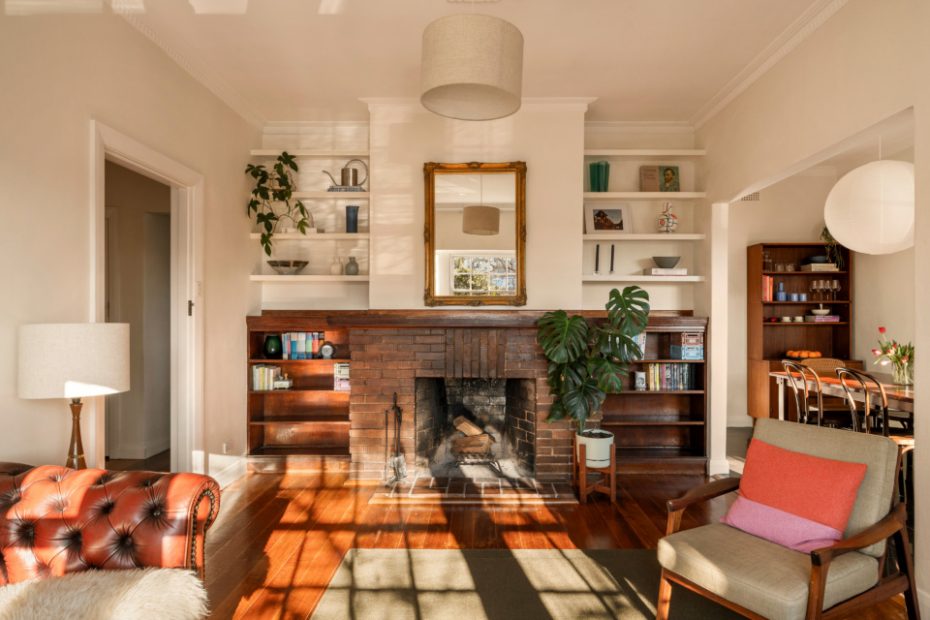
The beautiful Art Deco apartment at 1/178 Auburn Road, Hawthorn, is currently for sale in an off-market campaign with Savvi. Photo – SpaceCraft
Photo – SpaceCraft
‘It is a really beautiful Art Deco apartment on the top floor, one of only four in the building,’ Luke says of the apartment. Photo – SpaceCraft
The home features coveted features like large windows and spacious rooms. Photo – SpaceCraft
The view at 2/4-6 Grattan Street, Hawthorn. Photo – Aaron Hargreaves
Savvi sold the two-bedroom apartment for $900,000 in May this year. Photo – Aaron Hargreaves
Another flat inside a brick walk-up at 13/2 Brook Street, Hawthorn, recently sold by Savvi. Photo – Aaron Hargreaves
Photo – Aaron Hargreaves
If you’re in the market for an apartment, there’s a good chance you’ve seen some of Luke Saville’s social media videos, like ‘what $500k buys you in South Yarra’ or ‘what 680k buys you in Kew’.
The Melbourne-based real estate agent is an apartment specialist with 15 years’ experience, who launched Savvi after seeing how much the industry unfairly favoured houses over apartment listings.
‘The enthusiasm, the effort, the follow-up, all of it went to the houses. Which is understandable; they earn far more on a house, so apartments quietly got pushed to the side,’ he says.
‘Pretty early on, I had the ambition of one day opening an apartment-only agency, where every client gets the level of service they deserve — for both the seller and buyer.’
He’s a big believer that while many Australians have traditionally envisioned a house as their dream home, the struggle of getting into the market is helping shift people’s attitudes.
‘Buyers are slowly coming around to apartments, and once they do, most realise they’re not giving up nearly as much as they thought.’
We asked Luke for his expert advice on what to look for when buying an apartment.
Which apartment buildings are worth considering, and which to avoid
‘Anything from the 1930s to the 1970s. I’ve always loved mid-century architecture and the proportions of an Art Deco apartment, so I’m biased, but the practical case is just as strong,’ Luke says.
‘There are usually fewer apartments in the building. You often get a lock-up garage rather than a stacker or a permit. And they’re double or triple brick, which means you don’t hear your neighbours. Nobody builds like that anymore.’
While there are no hard and fast rules, Luke says buyers should be cautious of apartments built from around 2010 onwards: ‘Combustible cladding is the well-known [issue], but water ingress defects are more common and more expensive, and that cost lands on the owners.’
‘It’s not every building, by any stretch. It just means the homework matters more, which is really what the rest of this comes down to.’
What makes a good apartment
One of the best signs that an apartment will be a good place to live is if the building has a high owner-occupier ratio.
‘If most of the building lives there, it gets looked after, and the decisions made at meetings are made by people who have to live with them,’ Luke explains.
‘Common areas that look loved. Gardens, paint, carpet in the stairwell. That tells you more about how a building is run than any document will. And light from more than one side. Corner windows, or windows front and back — it’s the one thing you genuinely cannot fix later.’
The warning signs and how to look for them at your next inspection
‘Every apartment looks bright with six downlights on at 11am. Switch them off, and you’ll see what you’re actually buying,’ Luke says.
‘Then check the appliances. Run the oven, the dishwasher, the heating, the hot water. Most buyers don’t, and by the time you get to the pre-settlement inspection, it’s too late to do anything about it.’
He also recommends looking at the maintenance fund from the body corporate, and what’s sitting in the bank against any works the building might have coming up: ‘There’s nothing worse than a $15,000 special levy landing the day you settle.’
Why it pays to do your research
Navigating the body corporate and fees is perhaps one of the most confusing parts of buying an apartment. But Luke says it’s worth doing your homework and suggests asking the listing agent for the minutes of the building’s annual general meeting as soon as you are interested in the property.
‘One year on its own tells you very little,’ he says. ‘Three to five years gives you a proper picture of how the building is actually run, what’s been dealt with, what’s been argued about, and what’s still coming.’
What drives up the body corporate fees
‘Insurance is usually the biggest single line, and it has risen sharply in the last few years. After that, it’s anything that has to be serviced or staffed. Lifts, pools, gyms, gardens, basement ventilation and fire systems, and most expensively an on-site manager or concierge, which is a salary the owners are paying every year,’ Luke says.
As a rough guide, in Melbourne’s inner east, a walk-up with no lift and no facilities usually sits somewhere between $2000 and $4000 a year. Add a lift, a basement and some shared amenities, and it’s more like $5,000 to $6,000. A genuine luxury building with a pool, gym and concierge can be $10,000 or more.
‘One thing worth knowing is that fewer apartments don’t automatically mean cheaper fees. The insurance, the gardening and the administration still have to be paid, and in a block of six that’s split six ways instead of sixty,’ he adds.
Why you’ll never regret prioritising the basics
It’s hard to find a perfect place, so Luke’s biggest piece of advice is to ‘prioritise what you can’t change’.
‘You can redo a kitchen, a bathroom, the flooring and the paint, and you can do it whenever you can afford to. You can’t move the building, change the aspect, add a window, or fix a floor plan that doesn’t work,’ he says.
‘So the building, the position within it and the light come first. Condition comes last, and paying a premium for someone else’s renovation is usually the least efficient money you’ll spend. And nothing ticks every box. If you get seven out of ten, you’re doing really well.’